With no roster history or iconic moments to draw on, Toronto Tempo built its audience from the ground up by creating strong community belonging before the team ever took the court.
By Cindy McGlynn
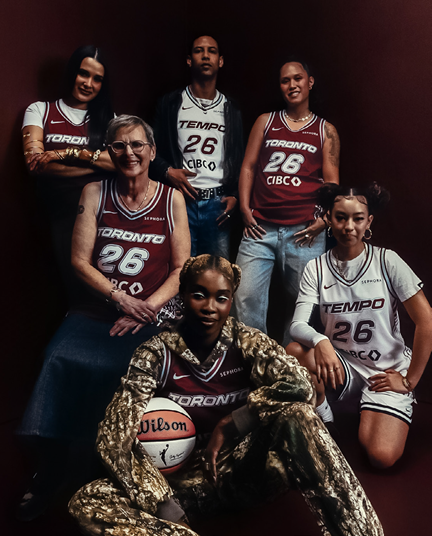
FOR MOST professional sports franchises, fan loyalty is built over decades, through triumphs, iconic players and shared memories. Toronto Tempo had none of these building blocks when, in 2024, it was announced as Canada’s first WNBA team.
The expansion franchise faced a unique marketing challenge in the lead-up to its inaugural regular season game on May 8, 2026: how do you create emotional connection before fans have a team history to connect with, or players to cheer for?
For Toronto Tempo chief marketing officer Whitney Bell, the answer was to build a community first. “When I started, we had zero on our email list and our social following was quite low,” says Bell. “We had to build our fan base from scratch, literally.”
The question was, “How do we start building affinity and love and community without having any players?” Bell says.
START WITH COMMUNITY
One answer was to host a series of Tempo LIVE community events in Toronto and Montreal, where fans could get a taste of the team before it ever took the court.
Toronto’s STACKT Market hosted a Tempo LIVE event where fans made their own pennants and signed a banner that now hangs in Coca-Cola Coliseum, the team’s home venue. Fans played on the Tempo Court and took in discussions exploring the intersection of basketball with art and culture.
The team took a similar approach online, using digital content to introduce new fans to the game, explain the rules and create entertaining content around athletes’ personalities.
“We’re really building awareness across the country that Canada has a WNBA team,” says Bell. “Then, once people are made aware, converting them to becoming fans and really loving the Tempo and women’s basketball.”
CANADA’S TEAM
The community approach purposely extends across the country. While Toronto is Tempo’s home base, the team has positioned itself as Canada’s team and reaches fans nationwide through its Cross Canada Series, which brings regular season games and fan activations to Montreal and Vancouver.
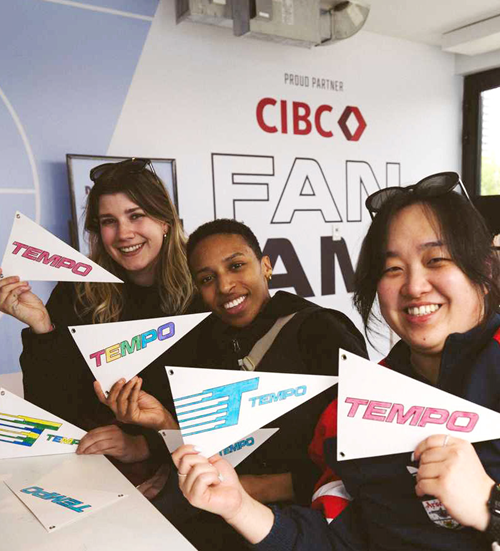
“We had three-on-three competition skills and drills with different girls’ organizations,” says Bell, describing a recent Tempo LIVE event in Montreal. “We had signings with our players, which were a massive draw. We have a fan camp where people can come and do things like make pennants or get their face painted.”
The Tempo’s national focus is reflected in everything from merchandise to game presentation. Their travelling court features the maple leaf and they have localized merchandise—including French-language “Le Tempo” apparel in Montreal. Their Rebel jersey is designed to represent Canada, not just Toronto.
MERCH WITH MEANING
Tempo also takes a fresh approach to merchandising and partners, working with iconic Canadian brands like Roots and female-founded brands like Peace Collective and Playa Society to create merchandise fans can wear beyond game day.
LEGO, the team’s official toy partner, has also connected basketball with youth engagement through its “flowers of the game” recognition, where standout players receive LEGO botanical bouquets.
Founding partners Sephora and CIBC helped launch the franchise, while Sephora’s Together We Win initiative brought the team’s message of inclusion and belonging into the community.
STRATEGIC INSIGHT: BELONGING BUILDS LOYALTY
Bell says the result of Tempo’s community building approach is a fan base that’s broader than traditional sports audiences. Their audience includes a strong mix of younger fans, new Canadians and BIPOC communities, with an almost even split between men and women.
For sports organizations looking to grow audiences, Bell says building loyalty is about creating a community that sees itself in the team from the very beginning. She believes one of the best ways to do this is to create belonging.
“It’s really going beyond the game and into the community,” says Bell. “Giving people a sense of belonging in a space where maybe they didn’t feel like they belonged before.”
Photos: Toronto Tempo
Published October 2026