By Wendy Helfenbaum
IN NOVEMBER 2025, Hockey Canada created its first Indigenous Advisory Circle (IAC) to guide efforts to advance reconciliation with Indigenous Peoples through sport.
The organization made a strong commitment to inclusion initiatives in 2023, publishing its first Equity, Diversity and Inclusion (EDI) Path Forward, which outlined ongoing work to drive long-term, sustainable change within hockey while respecting, protecting and promoting the rights and opportunities of Indigenous Peoples. An updated version, Integrating Inclusion, was released in January 2026.
The IAC was formed to provide strategic directions and recommendations that will help inform polices, programs and practices related to the Truth and Reconciliation Commission of Canada’s Calls to Action, especially 87 to 91 around the power of sport, says Denise Pattyn, senior vice-president of people, culture and inclusion for Hockey Canada.
“We don’t want the work to be performative, so we’ve been working hard to capture the voice and lived experiences of Indigenous Peoples to support us in our efforts,” she explains.
A UNIQUE OPPORTUNITY
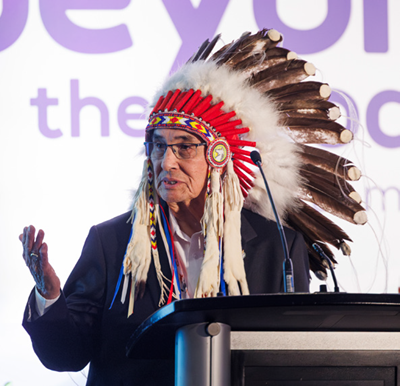
The IAC’s inaugural chair, Dr. Willie Littlechild, of the Ermineskin Cree Nation in Maskwacis, AB, is a Companion of the Order of Canada, a Canada’s Sports Hall of Fame inductee, and a residential school survivor whose work as a lawyer and Member of Parliament have made him an international advocate. Ten other representatives from six provinces have joined the Advisory Circle, including elders, people in mid-career and youth representatives.
“I’ve been involved with hockey for over 60 years; it’s a lifetime passion that saved my life throughout my childhood until today,” says Dr. Littlechild. “It’s quite a pioneering initiative, and I think what we’re doing together could be a template for other sports across the country to follow suit. It’s a unique opportunity at the highest level of Hockey Canada to be able to advise wherever we can as a circle. That’s why I’m so excited; this is a new model for national sports.”
Hockey Canada is a signatory to the Commonwealth Sport Declaration on Reconciliation and Partnership, and Pattyn says the IAC will draw on key initiatives and recommendations within that document and other reports, including and the National Indigenous Economic Strategy.
“This group has a strong interest in impacting anti-Indigenous racism on participation and retention and helping Hockey Canada monitor progress, including joining or hosting international working groups to share best practices and co-create solutions,” she notes.
“They want to have a global voice and impact on growing the game, and they have a specific interest in women and girls, which aligns well with Hockey Canada’s strategic initiatives.”
STEADY PROGRESS
Pattyn is optimistic that the IAC will achieve its goals but knows that transformative change won’t happen overnight.
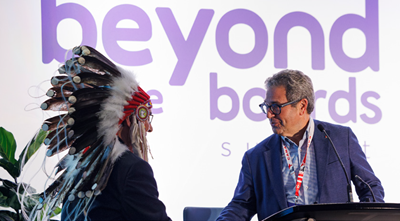
chair, Hockey Canada’s board of directors
“When you do work around culture or in the context of equity deserving groups, I always remind people that this is a journey,” she explains. “For example, we’ve adapted our bid guidelines for hosting events. When people submit a bid to host, there’s criteria linked to inclusion and diverse communities, within the area that’s hosting, that they need to meet. That includes having Indigenous Peoples have a voice at the table.”
Dr. Littlechild says he hopes the IAC will support growing the sport for Indigenous boys and girls while helping implement the calls to action.
“The Calls to Action were issued by our commission 10 years ago, and when I look across the country in terms of implementation, Hockey Canada has been a pioneer,” says Dr. Littlechild.
“For example, Call to Action 90 calls on national sports policies and programs to be positive and inclusive, and a bold one underneath promotes the power of sport to deal with anti-racism. That’s where we have a joint interest.”
Pattyn looks forward to the IAC guiding Hockey Canada to ensure the organization’s work is purposeful and progresses the right way.
“It’s all about the youth and contributing in a small way to keep sport in people’s lives and improve their off-ice skills like leadership and resilience.”
Dr. Littlechild believes the Advisory Circle’s Indigenous perspective can greatly contribute to Canada’s favourite sport.
“When there are concerns about safe sport and growing the game, we look at our sacred Indigenous teachings like respect,” he says. “That’s what makes me really happy: to be able to take on that opportunity.”
PHOTOS : HEATHER POLLACK/HOCKEY CANADA
Published March 2026