Ochapowace First Nation brought community strengths to the 2026 National Aboriginal Hockey Championships
By Sarah B. Hood
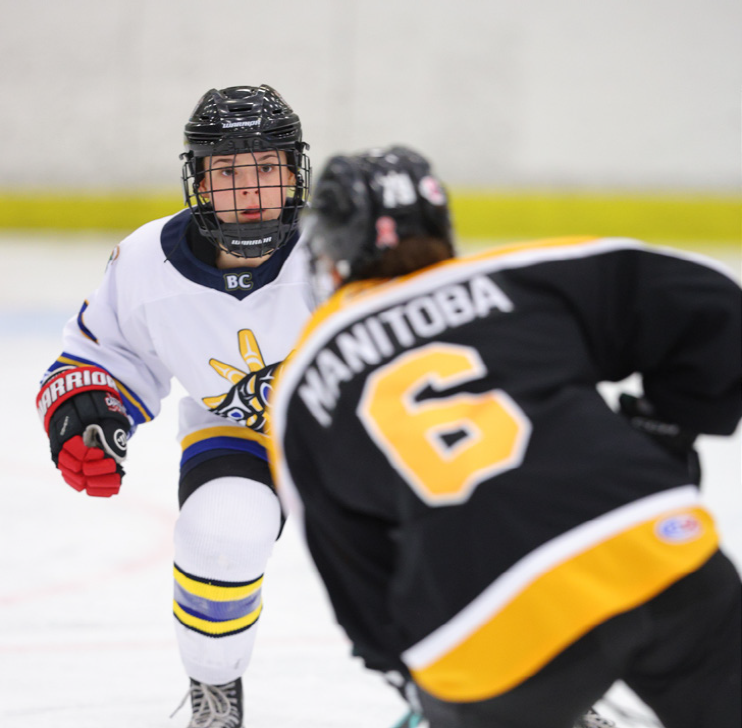
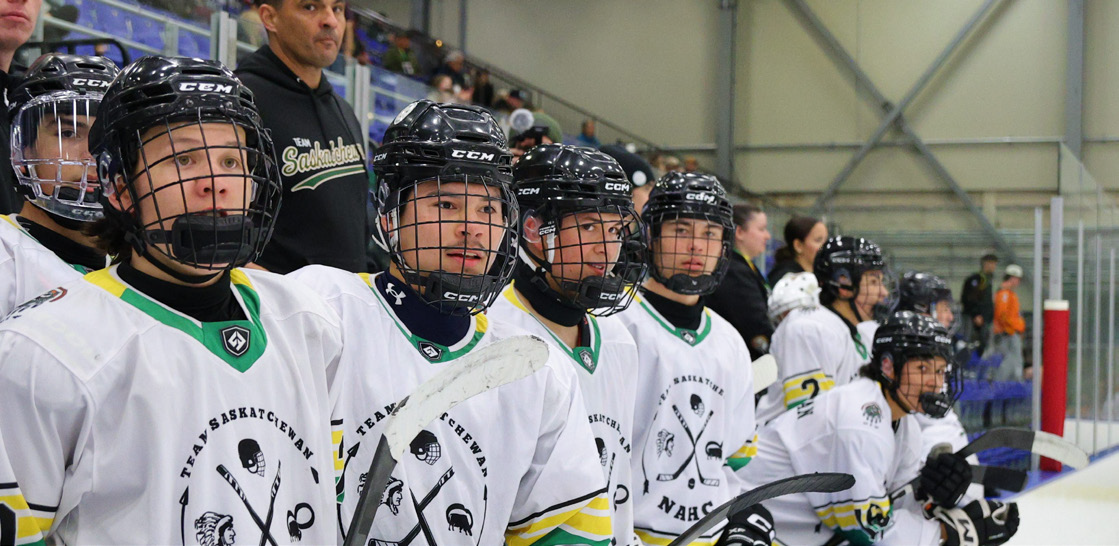
MANITOBA and Alberta were dominant at the 2026 National Aboriginal Hockey Championships (NAHC) in Regina last May 3–9, taking gold and silver respectively in both the men’s and woman’s competitions. Saskatchewan’s men and Team BC’s women were the bronze medal winners.
But the Championships are “more than a sporting event,” says Jaclyn Guenette, executive director of the Aboriginal Sport Circle, the national governing body and steward of the championships. “It’s about cultural pride. It’s about inspiring the next generation of community leaders; that’s what makes these games so unique and so special.”
Established by the Aboriginal Sport Circle in 2002, the hockey championships are hosted by a different Indigenous community each year. In 2026, Ochapowace First Nation (Treaty 4 Territory) hosted seven male and seven female provincial teams representing Canada’s top U18 players with Indigenous ancestry.
Typically, the Aboriginal Sport Circle carries out site visits to bidding locales about 18 months ahead of each event, but “we are expanding the runway for that,” says Guenette. Membertou, NS, has been awarded the 2027 event, and “we’re already looking at 2028.”
LOGISTICS
Ochapowace First Nation had previously hosted the Federation of Sovereign Indigenous Nations (FSIN) Adult Hockey Championships and the FSIN Adult Fastball Championships.
“We have a facility that has six rinks [The Co-operators Centre in Regina], but we only used two,” says Preston Henry, an Ochapowace First Nation member and the host society chair. He estimates that 4,000 to 5,000 people attended the six-day NAHC tournament, which was free to attend, with about 1,200 hotel rooms booked.
One of the biggest challenges for the Championships is to keep it accessible for the athletes and their families, who commonly attend, especially given that many of the venues are far from a major airport. Ground transport is typically a responsibility of the host community. Henry mobilized his community to volunteer as drivers and in other. roles. He notes that, although some teams wanted to explore the area, “the bid says we can only drive them back and forth between the rink and the dorm.”
The total volunteer pool numbered about 60; with six games per day, they worked long hours. “My scorekeeper stayed all day,” Henry says. Some shifts lasted from 9 a.m. to 6 p.m. “That’s a long day, but you’re watching good hockey.”
COMMUNITY PARTNERSHIPS
To bring the national championships together, the Aboriginal Sport Circle works with Hockey Canada and the Provincial–Territorial Aboriginal Sport Bodies. In addition, Ochapowace First Nation drew on the strength of its community at all levels of the event.
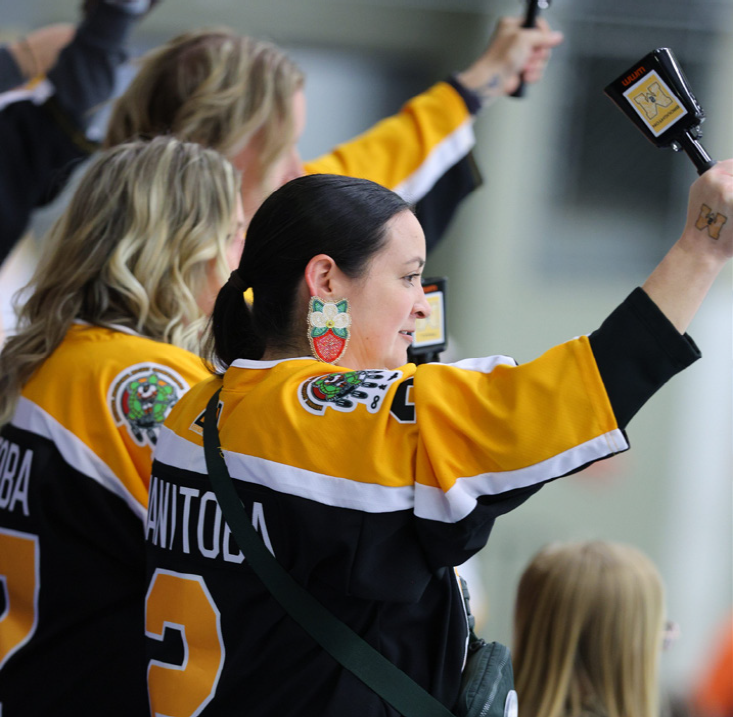
“Our Chief Shelley Bear had a big role in helping me find sponsorship,” says Henry. Key sponsors and partners included the Regina Hotel Association, the Saskatchewan Indian Gaming Authority (SIGA), the City of Regina and minerals company BHP. The championships were livestreamed on IOPPS (the Indigenous Opportunities Portal and Partnership System).
THE HOME TEAM
At the opening ceremonies and gala evening, the focus was on giving the athletes and their families a memorable experience. The gala featured local stars: actor and Ochapowace Nation member Erroll Kinistino (North of 60 and Corner Gas), youth leader Gunner Sparvier from Cowessess First Nation, singer-songwriter Terri Anne Strongarm from Star Blanket Cree Nation, Team Saskatchewan NAHC alumnus Connor Bear of the Regina Pats, and twins Jordyn and Kyla Bear, both signed to professional contracts with Örebro HK in Sweden. (Proceeds from a 50-50 draw went to support the twins on their return to Sweden.)
Overall, Henry says, the biggest win was “bringing together all the athletes and families to Treaty 4 and showing them the things we do. We made it exciting.”
Photos: Athletes Image Sports Photography
Published October 2026