
As destinations work to improve resident support for tourism, Japan’s Touristship concept offers a positive way to guide visitor behaviour and create community benefit.
By Angela Kryhul
IF YOU’VE never heard of Touristship before, Chieko Tanaka finds the word “sportsmanship” to be a useful analogy: Athletes shake hands, respect opponents and help define the culture of fair play, not because every action is enforced by rules, but because good behaviour is part of athletic identity and pride.
Touristship applies that logic to travel. Tanaka came up with the Touristship concept after moving to Kyoto in 2019, where she noticed tensions around how tourism affects public transit, public spaces and fragile cultural sites. Nearly 62.8 million people visited the city in 2025 and residents are generally positive about the benefits tourism brings. But bad behaviour by a few—such as when vandals carved graffiti into bamboo stalks at Kyoto’s famous Arashiyama Bamboo Grove last year—can quickly erode community trust and feed anti-tourism sentiment.
“Every destination is also someone’s home. Touristship means being mindful of the local community and environment, and contributing to the destinations in positive ways,” Tanaka explains. “It’s not just about enjoying the destination, but also caring for it and being a positive part of it.”
SMALL ACTS OF KINDNESS
Tanaka says tensions often result from a lack of understanding of local perspectives. Since 2021, the Touristship organization, with Tanaka as its representative director, has promoted responsible tourism through small acts of kindness and respect.
Touristship is not about scolding visitors into picking up their litter or keeping the noise down. It is framed around contribution, connection and being kind to residents and the destination.
In other words, Touristship asks: what if visitors were empowered to see themselves less as consumers of a place and more as temporary members of the community?
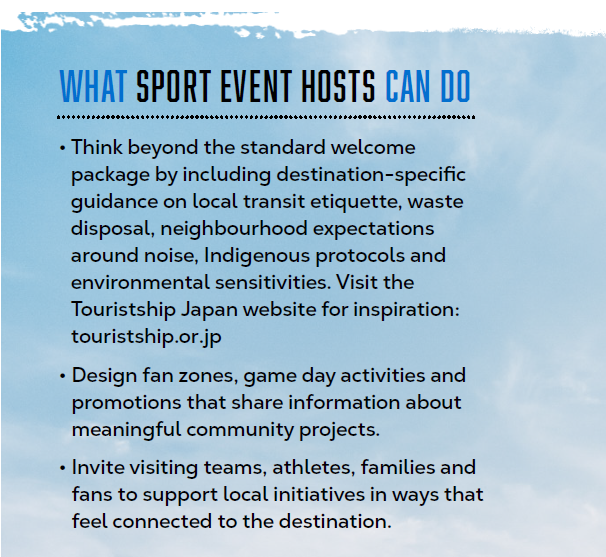
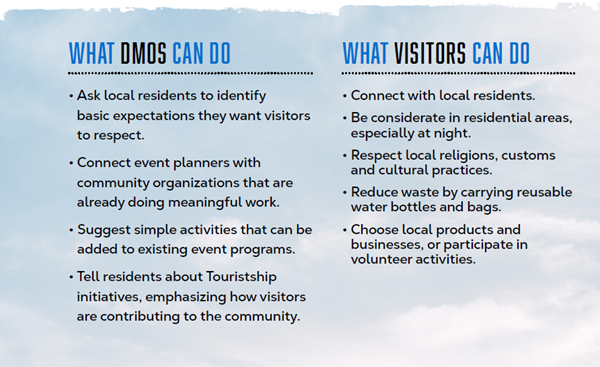
For destination management organizations (DMO), sport event organizers and business event planners, that question is increasingly relevant. Visitors can bring significant value to a host destination, but they also affect local neighbourhoods, transit systems, parks, cultural spaces and the residents who use them every day. Touristship offers a way to guide visitor behaviour in positive ways.
CASE STUDY: How Victoria Does Touristship
The idea resonated with Miranda Ji while she was travelling with her family in Kyoto, where she noticed Touristship messaging on public transit.
“The messaging was very welcoming. It was more ‘you should try this,’ instead of ‘don’t do that,’’’ says Ji, executive vice-president, sales and business development, Victoria Conference Centre and Business Events Victoria.
The message felt less like a warning and more like an invitation: “It was a refreshing change because when I travel, I see a lot of messaging [directed at visitors]. Touristship resonated because it made me feel that I could be part of the community and a good visitor.”
Touristship began in Japan, but its core idea travels well. Ji brought the concept home where it has found a natural connection within Destination Greater Victoria’s Impact & Legacy Program, which helps business events create positive community impact through local partnerships and gives planners simple ways to connect visiting groups with organizations already doing meaningful work in the region.
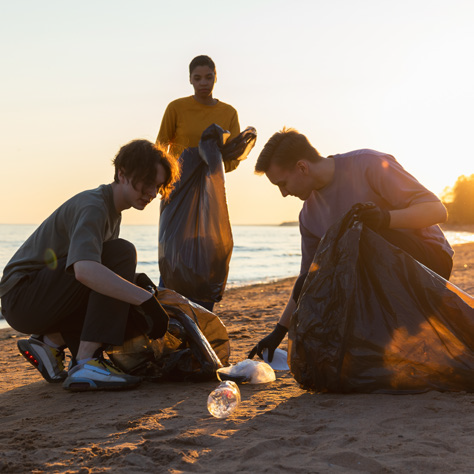
The program includes Indigenous education workshops and event gifting through the Aunty Collective; urban agriculture experiences with FED Urban Agriculture, an organization that promotes food security; group beach cleanups and education around local habitats, restoration and marine ecosystems with Peninsula Streams Society; environmental restoration activities with Power To Be; hygiene-product volunteering through Soap for Hope Canada; and care package activities and attendee donation drives with Wear2Start.
For Ji, these programs integrate the idea of Touristship by giving visitors a way to contribute to the community. The model is especially relevant for both sport event organizers and business event planners who are increasingly asked to demonstrate social impact alongside economic impact.
TRY A TDQUIZ
Chieko Tanaka says everyone is free to tailor the Touristship concept to their own destination and unique tourism goals.
One of the most effective ways to do that is by adapting Touristship’s signature Travel Destination Quiz (TDquiz), a fun, true-orfalse format that shares positive, nonpreachy insights on local history, customs and lifestyle, nature etiquette and more.
TDquiz events are tailored to each location and held live on-site, where it matters most—local content creates local respect.
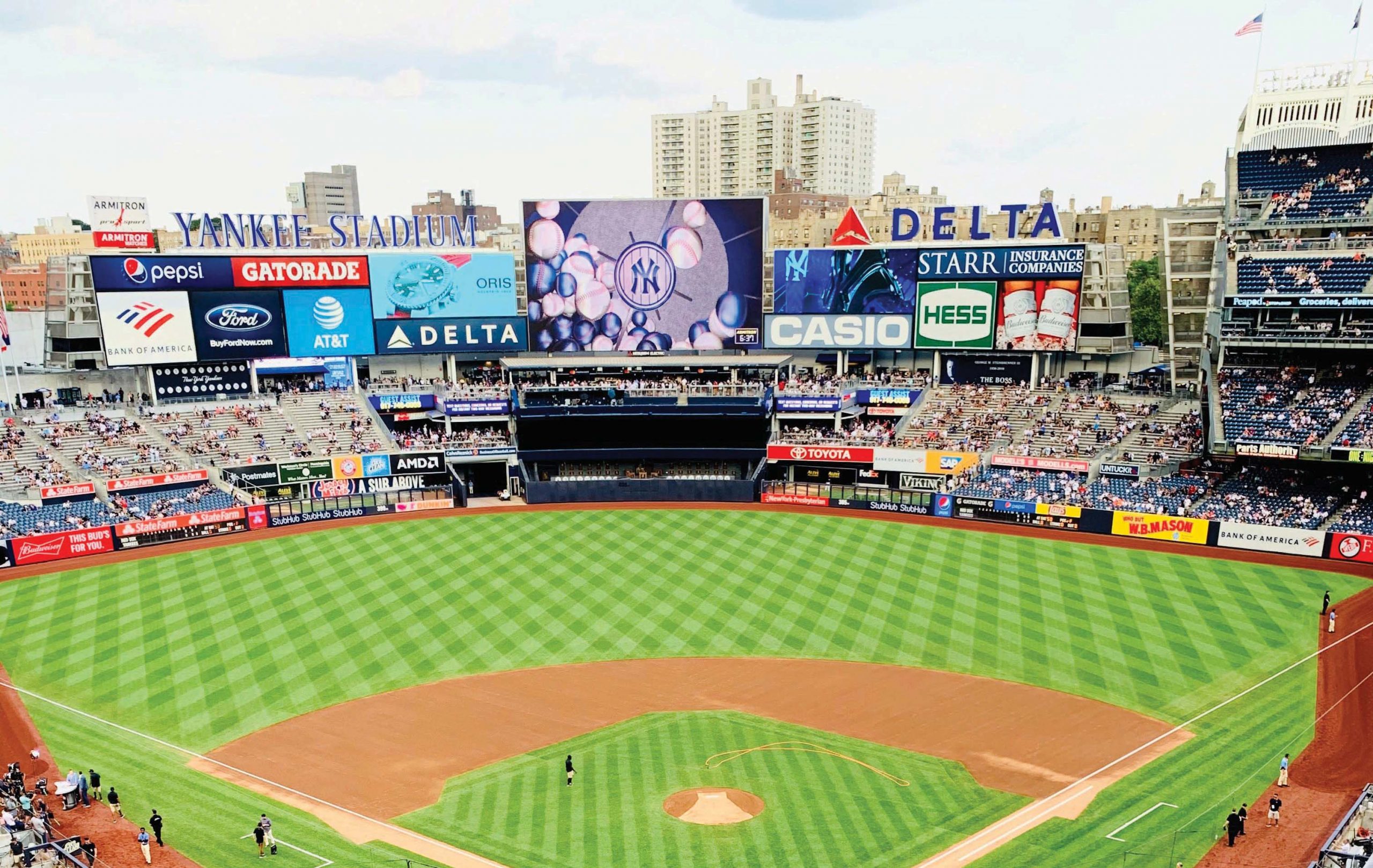
For sporting events, a TDquiz station could be set up as a game-day activation or within a fan zone, with questions that educate visitors on local customs and expectations that relate back to destination social impact and sustainability goals.
“We engage travellers face to face. Empathy does not come from a sign; it comes from a human conversation,” Tanaka says. “Nobody wants to be lectured, but everyone loves the quiz. And people remember what they enjoy far better than what they are told.”
Learn more about Touristship>>
Published October 2026