
New Canadian data from Girls Who Play Change the Game shows how sport participation shapes confidence, ambition and career readiness.
By Angela Kryhul, editor, ADRENALIN
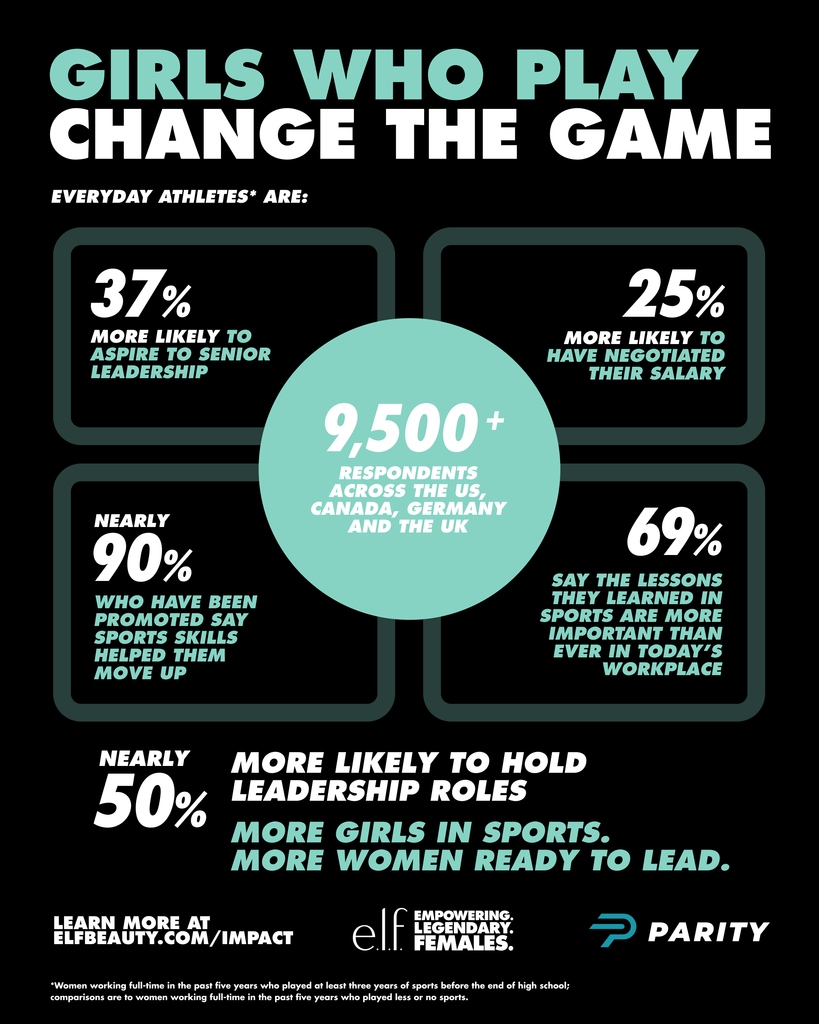
Most girls who play sports are better equipped as future leaders, according to a new report from the e.l.f. Beauty brand and Parity, a women’s sports consultancy. Some 9,500 women were surveyed in Canada, the United States, Germany and the United Kingdom and found that sports participation at an early age establishes positive habits, resilience and a comfort with pressure that can follow girls into the workplace.
Sport fuels ambition
Among Canadian respondents identified as everyday athletes—full-time, early career women who played sports for at least three years in high school—53% aspire to be in leadership roles or on a board one day. That makes them 46% more likely to hold that ambition than Canadian women who played less sport or no sport.
In Canada, 72% of everyday athletes say confidence learned through sport has helped them in their careers.
The traits these respondents most often connect to sport are resilience, confidence and mental strength/trust in self. The professional capabilities they learned most often include teamwork, performing under pressure and communication.
Learning to advocate
Across all four countries surveyed, 73% of everyday athletes said sport helped them advocate for themselves; 63% said sport helped them advocate for others; and 58% said sport helped them advocate for causes they care about
Staying in the game
The report concludes that when there are more girls in sport, there are more women prepared to lead.
Yet, the report is also clear about what still gets in the way: Girls in all four countries surveyed participate in sport at lower rates than boys. And among women who played sports, 49% experienced gender discrimination.
Encouragingly, more young women are staying in. Among Baby Boomer women who started in sports, 62% played through the end of high school. Among Gen Z women, that number rises to 70%.
What would keep more girls in sport? Women who quit before the end of high school pointed to practical and cultural fixes:
- Greater comfort in their bodies
- Fewer competing demands on their time
- More encouragement
- More exposure to women’s sports, role models and brand support
Published September, 2026